
 By
Key Takeaways
- Eco-friendly countertop cleaning reduces exposure to unnecessary harsh chemicals while supporting a healthier indoor environment.
- Understanding your countertop material is essential for choosing safe cleaning products and preventing scratches, stains, and surface damage.
- Everyday ingredients such as baking soda, mild dish soap, white vinegar, and castile soap can help tackle common household messes when used appropriately.
- Consistent daily maintenance prevents stubborn stains, grease buildup, and watermarks, making deep cleaning less time-consuming.
- Families with children and pets should pay particular attention to cleaning product ingredients, proper rinsing, and safe storage.
- Reusable microfiber cloths, washable cleaning tools, and refillable spray bottles help reduce household waste.
- Sustainable cleaning does not require expensive products or complicated routines. Small, practical changes can make a meaningful difference.
Why Eco-Friendly Countertop Cleaning Matters
Keeping kitchen and bathroom countertops clean is an important part of maintaining a hygienic, comfortable, and attractive home. These surfaces experience frequent contact with food, beverages, personal care products, water, and everyday household items. Without regular maintenance, grease, dust, soap residue, and bacteria can accumulate, making countertops look dull and potentially affecting household hygiene.
However, maintaining clean surfaces does not necessarily mean relying on strong commercial cleaning products. Many conventional cleaners contain fragrances, solvents, and other ingredients that can irritate sensitive skin, affect indoor air quality, or create unnecessary environmental concerns. Their packaging also contributes to household plastic waste, particularly when disposable wipes and single-use cleaning products become part of everyday routines.
Adopting eco-friendly bathroom countertop cleaning methods provides a practical alternative for households looking to maintain attractive surfaces while making more responsible cleaning choices.
Natural and environmentally conscious cleaning approaches can help reduce unnecessary chemical exposure, minimize disposable packaging, and encourage more thoughtful product consumption. They are particularly useful in homes where countertops are regularly used by children, pets, and family members with sensitivities to certain cleaning ingredients.
Another advantage is affordability. Simple ingredients and reusable supplies can often handle everyday cleaning tasks without requiring a different specialized product for every surface.
The key is understanding which cleaning methods are appropriate for each countertop material and using them consistently.
Understanding Different Countertop Materials Before Cleaning
Before selecting a cleaning solution, identify the material of your countertop. Different surfaces have different levels of porosity, durability, and resistance to moisture and acidic substances. Using the wrong cleaning method can gradually damage the finish, even when the ingredient appears harmless.
Granite Countertops
Granite is a popular natural stone because of its durability, distinctive appearance, and resistance to everyday wear. However, granite may be affected by acidic cleaners, abrasive materials, and unsuitable chemical products, particularly when its protective seal has deteriorated.
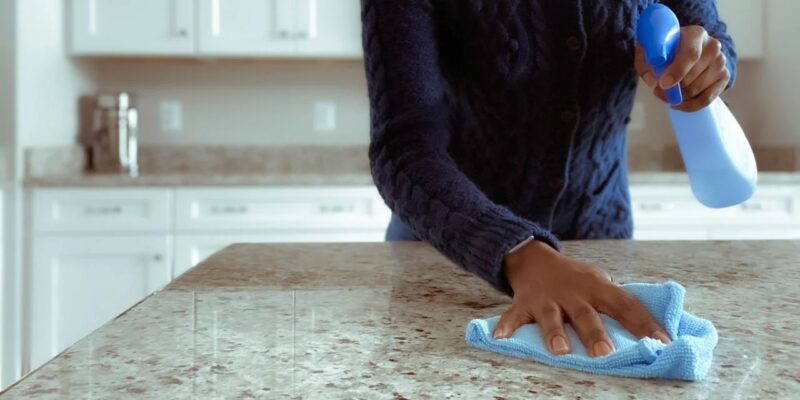
For everyday cleaning, use warm water with a small amount of mild dish soap. Apply the solution using a soft microfiber cloth and wipe the surface gently.
Avoid using vinegar, lemon juice, or strongly acidic homemade mixtures. These substances can damage the stone’s finish over time.
After cleaning, rinse away any remaining soap and dry the surface with a clean cloth to prevent watermarks.
Quartz Countertops
Quartz countertops are engineered surfaces made using natural quartz particles and binding materials. They are generally nonporous and require relatively little maintenance.
A simple mixture of warm water and mild dish soap is usually sufficient for routine cleaning. Use a soft cloth to remove fingerprints, spills, and everyday residue.
Avoid abrasive scouring pads, highly acidic cleaners, and excessive heat. Some harsh cleaning products can affect the resin used in engineered quartz surfaces.
Always follow the manufacturer’s cleaning instructions because recommendations can vary between products and finishes.
Marble Countertops
Marble is an elegant natural stone, but it requires more careful maintenance than many other countertop materials. Its calcium-based composition makes it particularly sensitive to acidic substances.
Avoid vinegar, lemon juice, and other acidic household cleaners because they can cause etching, leaving dull marks on the polished surface.
For regular maintenance, use a pH-neutral stone cleaner or a small amount of mild soap diluted in water. Wipe gently with a soft microfiber cloth and dry immediately.
For stains, choose a cleaning method specifically recommended for marble rather than experimenting with abrasive powders or homemade acidic solutions.
Laminate Countertops
Laminate is a practical and affordable countertop option commonly found in kitchens and bathrooms. Its smooth surface makes everyday cleaning relatively straightforward.
Use warm water mixed with a small amount of mild dish soap. Wipe away dirt using a soft cloth and dry the surface afterward.
Avoid excessive moisture around seams and edges because water can penetrate damaged areas and cause swelling. Steel wool, rough brushes, and abrasive cleaning powders should also be avoided because they can scratch the decorative layer.
Butcher Block and Wooden Countertops
Wooden countertops provide a warm, natural appearance but require additional attention because wood can absorb moisture.
Clean the surface using a slightly damp cloth and a suitable mild cleaner. Avoid soaking the wood or leaving standing water on it.
For food-preparation surfaces, use cleaning products approved for food-contact areas. Allow the wood to dry completely after cleaning.
Depending on the type of finish, periodic conditioning with an appropriate food-safe mineral oil or manufacturer-recommended product may help maintain the wood and reduce drying.
Essential Natural Cleaning Ingredients to Keep at Home
Building an environmentally conscious cleaning routine does not require purchasing dozens of specialty products. Several common household ingredients can handle everyday cleaning tasks when used correctly.
1. Baking Soda
Baking soda is a versatile household ingredient that can help absorb unpleasant odors and loosen certain types of surface residue.
When mixed with a small amount of water, it forms a paste that can be useful for cleaning suitable durable surfaces.
However, baking soda is mildly abrasive. Avoid aggressive scrubbing, particularly on polished stone, delicate finishes, and surfaces that scratch easily.
2. White Vinegar
Distilled white vinegar is commonly used for cleaning because its acidity helps dissolve mineral deposits and certain types of residue.
It can be useful for cleaning appropriate glass and other acid-resistant surfaces. However, it should never be treated as a universal countertop cleaner.
Avoid vinegar on marble, limestone, granite, and other acid-sensitive natural stone. It can also damage certain finishes and protective coatings.
3. Mild Dish Soap
Mild dish soap is one of the most practical ingredients for everyday countertop maintenance.
A small quantity diluted in warm water can remove grease, fingerprints, food residue, and everyday dirt without requiring aggressive cleaning products.
It is suitable for many countertop materials when used according to manufacturer recommendations. Always wipe away soap residue and dry the surface afterward.
4. Castile Soap
Castile soap is a plant-oil-based soap that can be used for various household cleaning tasks.
A small amount diluted in water can help remove light dirt and grease from suitable surfaces. Its versatility makes it a useful addition to a basic household cleaning kit.
However, using too much can leave a soapy film, particularly when water is hard. Use it sparingly and rinse surfaces when necessary.
5. Hydrogen Peroxide
Hydrogen peroxide is sometimes used for stain treatment and specific household cleaning applications.
However, it should be used carefully because it can discolor certain materials and finishes. Always check manufacturer guidance and test an inconspicuous area before use.
Never mix hydrogen peroxide with vinegar or other cleaning products in the same container.
6. Microfiber Cleaning Cloths
Although microfiber is a cleaning tool rather than a cleaning ingredient, it plays an important role in sustainable household maintenance.
Its fine fibers help collect dust, fingerprints, and everyday dirt using relatively little water. Reusable microfiber cloths can also reduce dependence on disposable paper towels.
Wash them regularly according to their care instructions and keep separate cloths for kitchen, bathroom, and general household cleaning.
Simple DIY Countertop Cleaning Solutions
Preparing basic cleaning solutions at home can make regular maintenance easier and reduce the need for numerous commercial products.
Here are a few practical options.
Recipe 1: Gentle Everyday Countertop Cleaner
Ingredients:
- 2 cups of warm water
- 1 teaspoon of mild dish soap
- One reusable spray bottle
- A clean microfiber cloth
Instructions:
- Pour the warm water into a clean spray bottle.
- Add the mild dish soap.
- Close the bottle and gently mix the ingredients.
- Spray a small amount onto the countertop or directly onto the cleaning cloth.
- Wipe the surface gently to remove dirt and everyday residue.
- Use a clean damp cloth to remove remaining soap if necessary.
- Dry with a soft microfiber towel.
This gentle solution works for many common countertop materials, provided the manufacturer’s care instructions allow mild soap-based cleaning.
Recipe 2: Baking Soda Paste for Suitable Surfaces
Ingredients:
- 3 tablespoons of baking soda
- A small amount of water
- A soft cleaning cloth
Instructions:
- Place the baking soda in a small bowl.
- Gradually add water until a thick paste forms.
- Apply a small quantity to a suitable stained area.
- Gently wipe without applying excessive pressure.
- Remove the paste completely using a damp cloth.
- Dry the surface thoroughly.
This method may help with certain stubborn marks on compatible, durable surfaces. Do not use it on polished stone, delicate finishes, or materials that may be scratched by mild abrasives.
Recipe 3: Vinegar Solution for Appropriate Surfaces
Ingredients:
- 1 cup of distilled white vinegar
- 1 cup of water
- A clean spray bottle
Instructions:
- Combine equal quantities of water and white vinegar.
- Pour the mixture into a clearly labeled spray bottle.
- Apply it only to surfaces confirmed to be compatible with acidic cleaners.
- Wipe using a clean microfiber cloth.
- Rinse if needed and dry the surface.
This solution may be useful for certain glass and other acid-resistant surfaces. Do not use it on granite, marble, limestone, or other acid-sensitive materials.
Important: Never combine vinegar with bleach, ammonia, hydrogen peroxide, or other cleaning chemicals. Mixing household cleaners can produce hazardous reactions.
Three-Minute Daily Countertop Maintenance Habits
One of the easiest ways to maintain clean countertops is to prevent dirt and spills from accumulating in the first place.
A few minutes of daily maintenance can significantly reduce the amount of time needed for deeper cleaning.
Consider incorporating these habits into your everyday routine:
- Wipe surfaces after use: Remove food crumbs, water droplets, toothpaste, and other residue before they dry.
- Clean spills immediately: Coffee, juice, sauces, and cooking oils can leave stubborn marks if allowed to sit.
- Use separate cleaning cloths: Keep kitchen and bathroom cloths separate to reduce the transfer of dirt and microorganisms.
- Dry surfaces after cleaning: Removing excess moisture helps prevent watermarks and residue.
- Keep frequently used products organized: Store toiletries, cooking accessories, and frequently used household items in designated containers.
- Clean around sinks and faucets: These areas frequently collect water deposits, soap residue, and grime.
- Encourage family participation: Simple habits such as wiping surfaces after meals make maintenance easier for everyone.
These small tasks help prevent the buildup of stubborn dirt and reduce the need for aggressive cleaning methods.
How to Remove Common Countertop Stains Naturally
Different stains require different approaches. Choosing the right treatment is important because an unsuitable cleaning method may cause more damage than the original stain.
Removing Coffee and Tea Stains
Coffee and tea can leave visible brown marks, particularly when spills are not cleaned immediately.
Start by blotting the spill with a clean cloth. Use warm water and mild dish soap to remove remaining residue.
For compatible surfaces, a suitable baking soda paste may help with persistent marks. Avoid abrasive scrubbing on polished or delicate materials.
Cleaning Grease and Cooking Oil
Cooking oil and greasy food residue can quickly make kitchen countertops feel sticky.
Use a small quantity of mild dish soap diluted in warm water. Gently wipe the affected area with a microfiber cloth.
Repeat if necessary, then rinse away soap residue and dry the surface.
Removing Watermarks
Watermarks commonly develop around sinks, faucets, and bathroom accessories.
For routine prevention, wipe standing water away and dry the countertop after use.
If mineral deposits have developed, choose a suitable cleaner based on the countertop material. Acid-based products may work on certain compatible surfaces but should be avoided on acid-sensitive natural stone.
Tackling Soap Residue
Bathroom countertops often collect soap residue from handwashing products, cosmetics, and personal care items.
A mild soap-and-water solution can help remove this buildup. Use a soft cloth and rinse the surface when necessary.
Pay attention to areas around soap dispensers, toothbrush holders, and faucet bases.
Dealing With Sticky Food Residue
Sticky spills from honey, sauces, syrups, and sweetened drinks can become difficult to remove when they dry.
Soften the residue using a damp cloth and warm water before wiping. If necessary, use a small amount of mild dish soap.
Avoid scraping with sharp objects because they may damage the countertop finish.
Kid- and Pet-Safe Countertop Cleaning Practices
Households with children and pets should be particularly mindful of the products used on frequently touched surfaces.
Young children often touch countertops and nearby objects before putting their hands in their mouths. Pets may also come into contact with cleaning residues while exploring kitchen or bathroom spaces.
Choosing a gentle cleaner is a useful first step, but it is equally important to follow proper cleaning and storage practices.
Consider these precautions:
- Use simple, appropriately diluted cleaning solutions whenever possible.
- Avoid unnecessary fragrances and essential oils, especially around pets. Some essential oils can be harmful to certain animals.
- Rinse food-preparation surfaces when required by the cleaning product instructions.
- Keep spray bottles and concentrated cleaning ingredients away from children.
- Never leave cleaning solutions in unmarked drinking bottles or food containers.
- Avoid mixing different cleaning products, even when they are marketed as natural.
- Allow surfaces to dry before children or pets come into contact with them.
- Follow product labels and manufacturer recommendations for disinfecting food-contact surfaces.
It is important to remember that natural does not automatically mean harmless. Some plant-based ingredients and concentrated household substances can still cause irritation or poisoning if misused.
A thoughtful cleaning routine combines appropriate ingredients, proper dilution, thorough rinsing, and safe storage.
Reducing Household Waste With Sustainable Cleaning Supplies
Eco-friendly cleaning involves more than choosing different ingredients. The tools and packaging used during cleaning also have an environmental impact.
Replacing disposable cleaning products with reusable alternatives is a practical way to reduce household waste.
Choose Reusable Microfiber Cloths
Instead of using paper towels for every small spill, keep several washable microfiber cloths available.
They are useful for wiping countertops, cleaning mirrors, removing dust, and drying surfaces.
Wash them regularly and avoid using fabric softeners if the cloth manufacturer’s instructions recommend against them.
Use Refillable Spray Bottles
Reusable spray bottles can reduce the number of single-use plastic containers purchased over time.
Choose durable bottles that are easy to clean and label each one clearly. Avoid storing homemade solutions indefinitely, especially mixtures containing water without preservatives.
Replace Disposable Sponges
Washable cleaning cloths and durable reusable sponges can help reduce disposable cleaning waste.
Allow reusable tools to dry completely between uses and replace them when they become worn or difficult to clean.
Repurpose Old Cotton Clothing
Old cotton T-shirts and towels can be cut into practical cleaning rags.
These are particularly useful for wiping away dirt, cleaning less delicate surfaces, and handling small household spills.
Purchase Concentrated Cleaning Products
When purchasing ready-made cleaning solutions, consider concentrated formulas and refill options where available.
These products can reduce packaging and transportation requirements compared with repeatedly purchasing large quantities of ready-to-use sprays.
Dispose of Cleaning Products Responsibly
Do not automatically pour unwanted cleaning chemicals down the drain or mix them with other household waste.
Follow local disposal guidance and the manufacturer’s instructions for unwanted or expired products.
Common Countertop Cleaning Mistakes to Avoid
Even a well-intentioned cleaning routine can damage surfaces if the wrong products or techniques are used.
Here are some common mistakes worth avoiding.
Using vinegar on every surface: Vinegar is acidic and unsuitable for several natural stone countertops, including marble and granite.
Scrubbing too aggressively: Rough pads, steel wool, and abrasive powders can leave scratches and dull finishes.
Using too much soap: Excessive soap can create a sticky film that attracts additional dirt and dust.
Leaving water on wooden countertops: Prolonged moisture exposure can cause swelling, discoloration, and other damage.
Ignoring manufacturer instructions: Different countertop brands and finishes may require specific maintenance products.
Mixing cleaning ingredients: Combining household cleaners can create hazardous chemical reactions.
Using the same cloth everywhere: Kitchen and bathroom cleaning tools should be kept separate to reduce cross-contamination.
Ignoring spills: Leaving acidic drinks, cooking oils, and colored liquids on surfaces for extended periods can increase the likelihood of staining or damage.
Avoiding these mistakes helps protect the appearance and durability of countertops while making cleaning more efficient.
Creating a Weekly Eco-Friendly Countertop Cleaning Routine
Daily maintenance handles small messes, but a weekly cleaning schedule helps address areas that are frequently overlooked.
A simple routine can keep your countertops in good condition without requiring hours of work.
Monday: Kitchen Countertops
Remove appliances and containers, clean the exposed areas, wipe down the main surface, and dry thoroughly.
Tuesday: Bathroom Countertops
Clean around sinks, faucets, soap dispensers, and other frequently touched areas.
Wednesday: Spot Cleaning
Check for dried spills, sticky residue, watermarks, and other visible marks.
Thursday: Cleaning Tools
Wash reusable microfiber cloths, clean spray bottles, and inspect sponges and brushes.
Friday: Detailed Surface Cleaning
Move countertop accessories and clean underneath them. Pay particular attention to corners, seams, and edges.
Weekend: Maintenance Check
Inspect natural stone sealants, wooden surface finishes, and other manufacturer-recommended maintenance requirements.
This flexible schedule can be adjusted according to your household size and daily activities.
How to Make Eco-Friendly Cleaning More Affordable
Switching to sustainable cleaning does not have to increase your household expenses.
In many cases, a smaller collection of carefully selected cleaning supplies is enough to manage regular countertop maintenance.
Start by identifying the surfaces in your home and purchasing only the products suitable for those materials.
Use mild dish soap and water for routine cleaning wherever appropriate. Keep reusable cloths available instead of purchasing disposable wipes regularly.
Prepare small quantities of homemade cleaning solutions rather than making large batches that may sit unused for months.
You can also reduce costs by repurposing old towels, clothing, and suitable containers as cleaning supplies.
When purchasing commercial products, compare their concentration, packaging, and recommended usage rather than focusing only on the initial purchase price.
The goal is to create a practical routine that balances affordability, convenience, surface protection, and environmental responsibility.
Final Thoughts: Make Eco-Friendly Countertop Cleaning a Lasting Habit
Maintaining clean countertops does not require an extensive collection of chemical cleaners or complicated household routines. With the right knowledge, a few reliable ingredients, and consistent maintenance habits, it is possible to keep kitchen and bathroom surfaces looking fresh while reducing unnecessary waste.
The most important step is understanding your countertop material. Granite, marble, quartz, laminate, and wooden surfaces all have different cleaning requirements. Choosing appropriate products and avoiding unsuitable ingredients helps preserve their appearance and extends their useful life.
Start with simple changes, such as replacing disposable paper towels with reusable microfiber cloths, using mild soap for everyday cleaning, and addressing spills as soon as they occur.
Pay attention to product ingredients, store cleaning supplies safely, and avoid assuming that every natural ingredient is suitable for every surface.
Over time, these small improvements can become part of your regular household routine. They can help reduce unnecessary purchases, minimize packaging waste, and create a cleaner and more comfortable living environment.
Ultimately, eco-friendly countertop cleaning is about making thoughtful choices that benefit both your home and the environment. A consistent approach, combined with the right cleaning techniques, makes sustainable maintenance practical for even the busiest households.











Comments